Guerrilla DH Project: The First Class Check-In
What stories do you think you’ll be addressing? Why this story?
ARtful Environments reimagines the story of Canadian environment as depicted by the Group of Seven. The Group of Seven’s paintings, created between 1920 and 1933, are iconic in their representations of Canadian landscape, and as such they offer an opportunity to open an historically-rooted dialogue about environmental degradation and the climate crisis.This is not specifically an Ottawa story, but rather a national and international story that is anchored by this city and it’s reputation as the national capital.
This project, the stories it tackles, and its methods are conceptualized through four main pillars:
- Canadian landscape art & the Group of Seven
- Digital interventions in museum spaces
- Climate context of 2019
- Historians as activists
Our aim is to enter into a dialogue with the artwork, using digital tools to explore changing environmental realities.
This project is not done with the intention of discrediting the work of the Group of Seven. Rather, the intention is to identify the nuance and environmental-consciousness already present in their works and reconcile this with our contemporary context.
How might it be dangerous and to whom?
Working and behaving in non-prescribed ways in a major institution can be considered a “dangerous” subversive act; however, this is only dangerous if people/institutions see. Consequences for this subversion falls on the creators as well as the users that are going against the institutional grain. With this in mind, our goal is to approach this work with an open-mind and the intention to start a dialogue.
Being guerrilla
The guerrilla aspect of this work is that we are offering this content to viewers without explicit textual interpretation. With this approach, we are asking viewers to consider the image in changing historical contexts as well as their own involvement in the image and the world it represents.
How has your chosen tech been used in Ottawa? How could it be used? What are its affordances and edges? Where and why do these resonate with the history you wish to tell/explore?
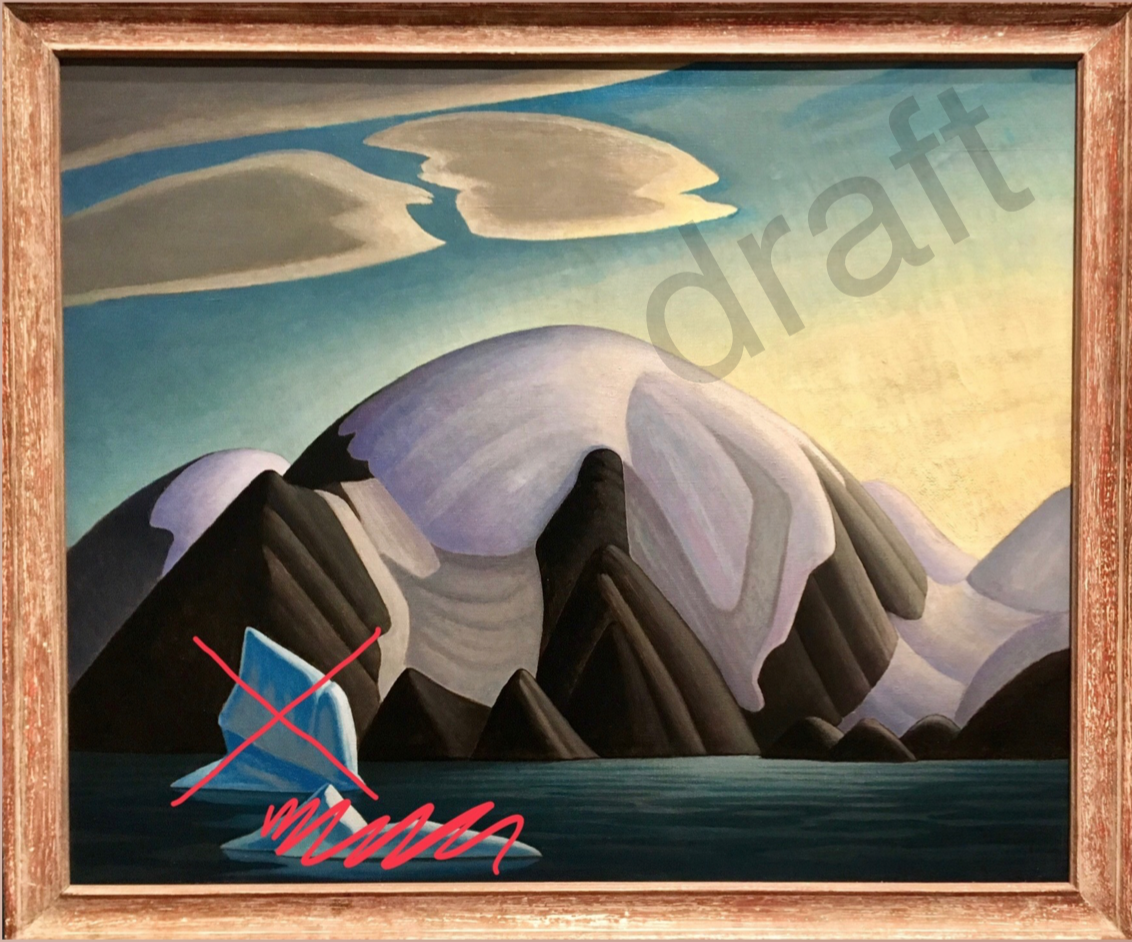
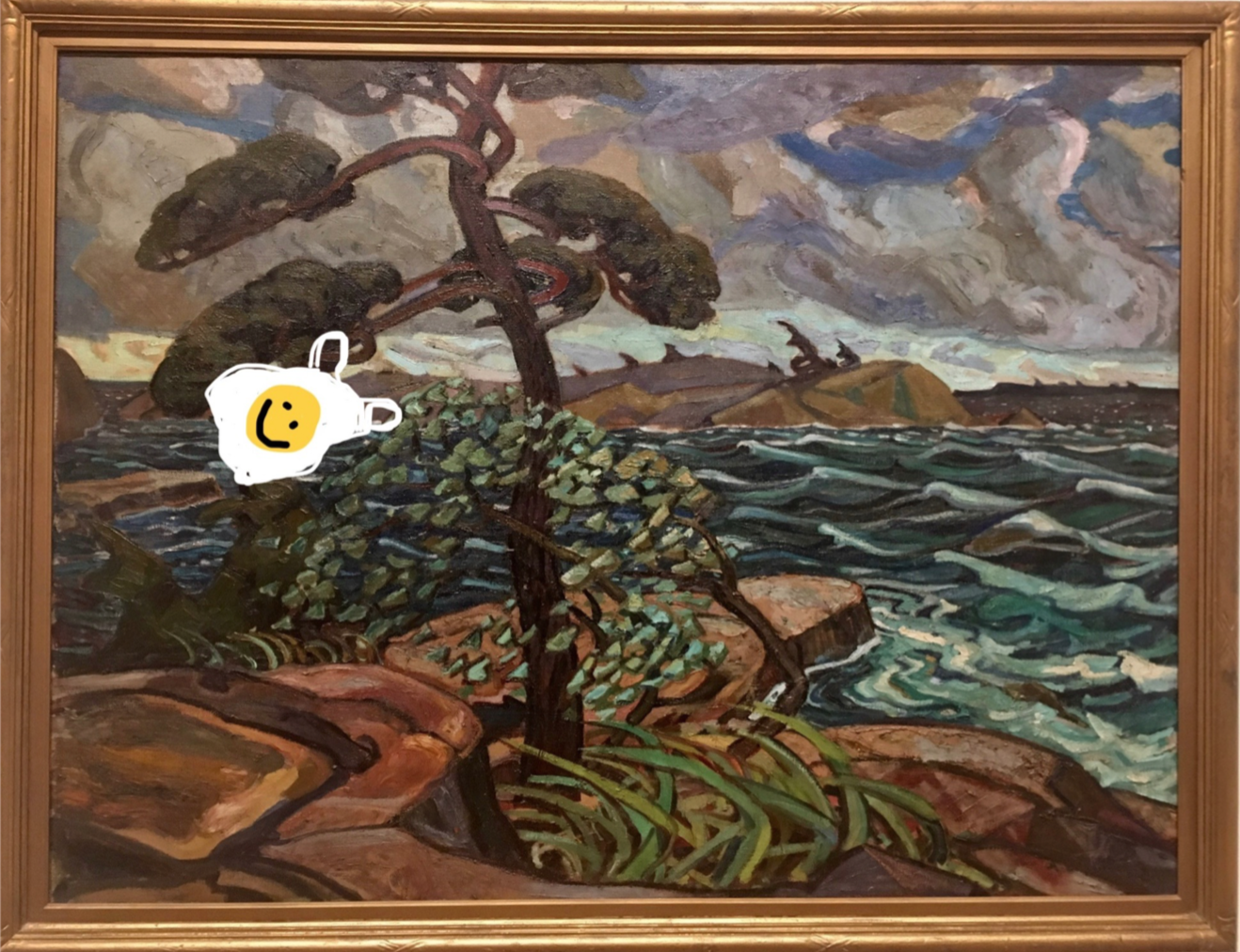
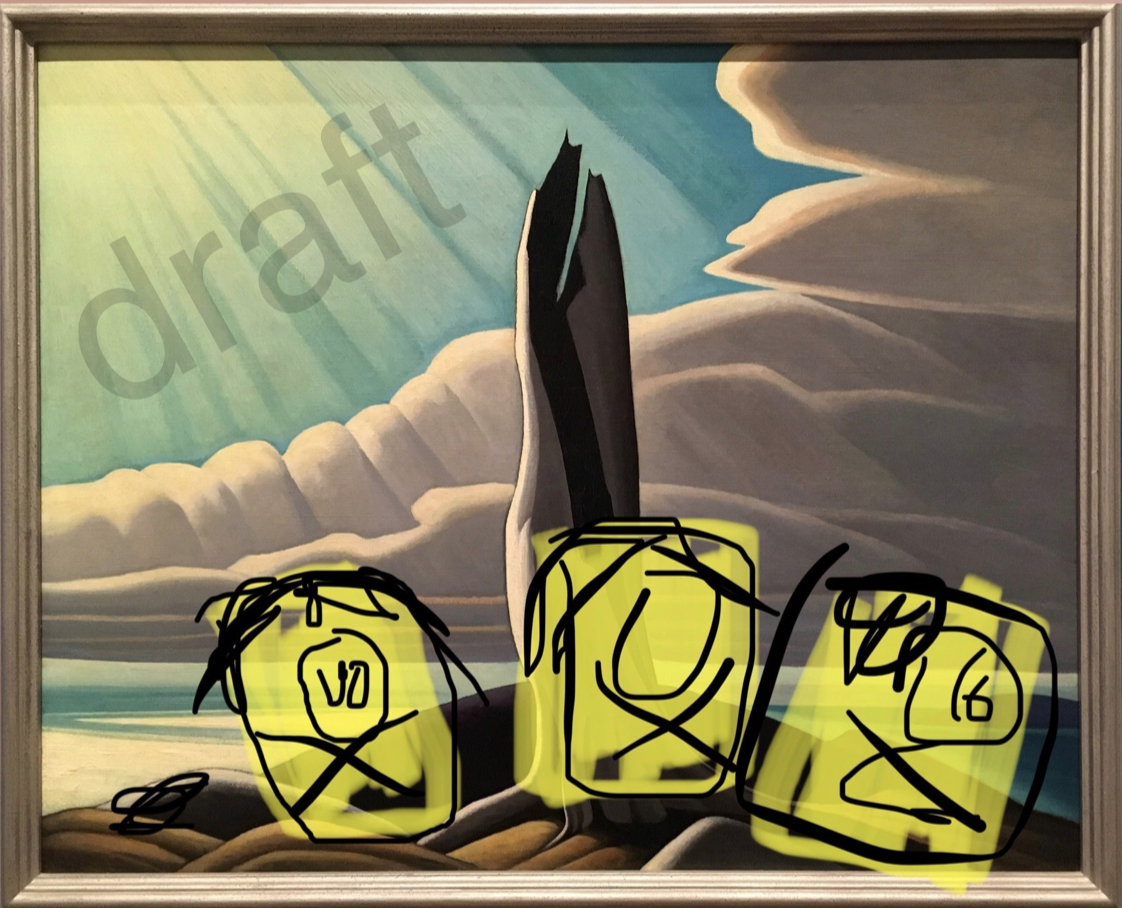
ARtful Environments is a guerrilla augmented reality (AR) project that engages with Group of Seven paintings in the National Gallery of Canada’s permanent collection. Using a narrative-based AR interface - ARIS - this project allows gallery visitors to scan select paintings, and discover an alternative and contemporary visual retelling of the painting which acknowledges and explores a near-century of environmental degradation.
By imposing unauthorized AR interventions depicting modern environmental threats upon paintings of Canadian landscapes, this project reimagines the narratives of environment-focused paintings in the present-day context and calls viewers to consider the “space in between,” from the painting provenance to the present. This “space in between” is the historical context.
AR has been used at the National Gallery before at the Anthropocene exhibit last fall.
Affordances: accessibility and mobility, apparently user-friendly, pre-designed program
Edges: Marissa couldn’t figure it out and make a demo work - so perhaps not as easy as it seems
What is it that you don’t know but need to find out?
Tech: While we have a strong interest in using AR tech, our initial trial run with ARIS was a failure. We need to investigate why it didn’t work. Another experiment with ARIS (or two, or three) needs to be carried out to understand what our experience can look like. Finally, if troubles with ARIS persist, we need to find a new AR program to use.
History: There is an extensive body of scholarly literature on (a) environmental and climate history in Canada, and (b) Canadian landscape imagery and its meanings. We need to narrow our scope and develop a manageable bibliography for the historical underpinnings of this project. As well, we have kinks to work out regarding “the space between” and how to communicate this through the project.
Logistics: Specific images have to be selected, and their augmentations have to be created. Length of AR experience to be determined (what is manageable and digestible for the visitor). How to integrate accessibility into the app experience (image descriptions for screen readers, for example).
Potential conclusions: Should we present a set of conclusions on what we think these reimaginings tell us about the current state of the climate crisis, or should we let viewers draw their own conclusions after being encouraged to consider the issue through an historical-lens? How much agency do we give the viewer? As well, how much should be communicated textually versus visually? Here lies a tension between visual art and history with which this project must grapple.